
China-Central Asia Forum on National Governance and Sustainable Development (2026) Successfully Held at Lanzhou University
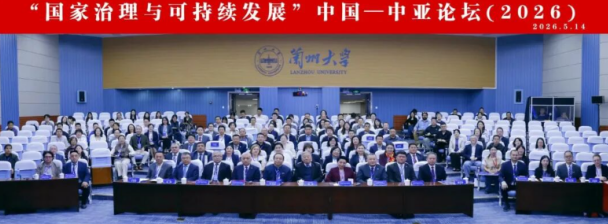
On May 14, the China?Central Asia Forum on National Governance and Sustainable Development (2026) was successfully held at Lanzhou University. More than 100 experts and scholars from over 50 universities and research institutions, both in China and abroad — including Kazakhstan, Kyrgyzstan, Uzbekistan, Tajikistan, and other Central Asian countries, as well as Fudan University, Xi’an Jiaotong University, the Chinese Academy of Social Sciences, and Liaoning University — gathered in Lanzhou. They engaged in in?depth exchanges on topics such as national governance, sustainable development, high?quality Belt and Road cooperation, and the digitalization of higher education, jointly exploring theoretical and practical pathways for promoting modernization and regional coordinated development between China and Central Asian countries.
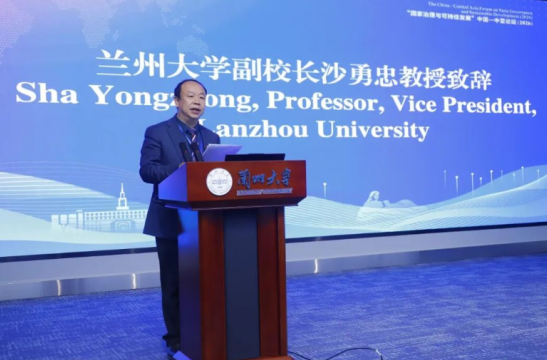
At the opening ceremony, Professor Sha Yongzhong, Vice President of Lanzhou University, delivered a speech on behalf of the university. He extended his welcome and gratitude to the guests, experts, scholars, business representatives, and partner institutions from Central Asian countries, noting that the ancient Silk Road has long served as an important bond of civilization exchange and people?to?people connectivity between China and Central Asia. Against the backdrop of increasing global challenges, improving national governance and promoting sustainable development have become common issues facing China and Central Asian countries. He pointed out that Lanzhou University, as one of the earliest Chinese institutions to conduct Central Asian studies, has long relied on relevant research platforms to deepen its work in Central Asian studies and international cooperation, forming a development system that integrates academic research, think tank services, and talent cultivation. Professor Sha Yongzhong expressed the hope that this forum would serve as an opportunity to further deepen exchanges between Lanzhou University and Central Asian universities, promoting the formation of a closer, more pragmatic, and regularized cooperation mechanism.
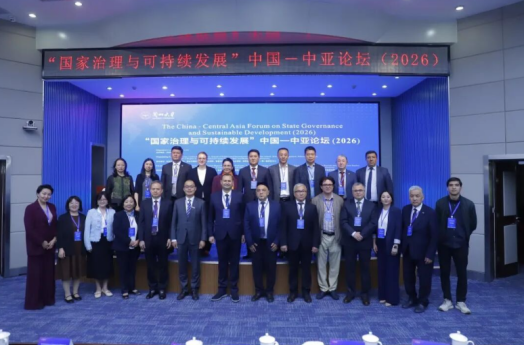
Yessbol Omirzhanov, Head of the International Cooperation Department at Al-Farabi Kazakh National University (Kazakhstan), reviewed the fruitful achievements of the first forum and fully affirmed its positive role in promoting interdisciplinary exchanges and jointly building a knowledge community. Sharifov Komiljon Karimovich, Head of the International Relations Department at the Tajik National University of Law, Business and Politics (Tajikistan); Jurakulov Shokhrukh Davronovich, Director of the Institute for Human Resource Management and Mahalla Development at Samarkand State University (Uzbekistan); and Keldibekov Baktybek Torobekovich, Head of the International Relations Department at Jusup Balasagyn Kyrgyz National University (Kyrgyzstan), among other foreign representatives, elaborated on the significance of the forum in deepening high-level dialogue and practical cooperation between China and Central Asia. The representatives also put forward multiple cooperation initiatives to strengthen joint research, talent cultivation, language training, and institutionalized collaboration, expressing a shared vision of promoting the steady and sustained development of bilateral relations and jointly building a stable and prosperous future for the region.
During the keynote speech session, speakers engaged in in-depth discussions on topics such as China Central Asia relations in the era of artificial intelligence, high?quality Belt and Road development, multilateral cooperation mechanisms, and regional governance. Professor Yang Shu, Director of the Institute for Central Asian Studies at Lanzhou University, delivered a speech titled “China Central Asia Relations in the Era of Artificial Intelligence,” drawing on his long term experience in Central Asian research. He pointed out that new technologies such as AI are profoundly influencing models of regional cooperation, yet the foundation of inter state relations remains rooted in historical and cultural identity and genuine people to people interaction. Technology, he argued, should serve as an important tool for promoting connectivity and cooperative development. Experts and scholars from Kyrgyzstan, Uzbekistan, Tajikistan, and other countries also exchanged views on topics including global governance, the internationalization of education, sustainable development, and pathways for regional cooperation. The participating experts generally agreed that, in the face of headwinds to globalization and escalating geopolitical risks, China and Central Asian countries should strive to build a closer governance partnership, establish institutionalized frameworks for cooperation in areas such as digital governance, green development, and people to people exchanges, and jointly solidify the foundation for regional sustainable development.
On the afternoon of May 14, seven thematic sub forums were held concurrently during the forum. Chinese and international scholars engaged in in?depth discussions on topics such as national governance and Chinese style modernization, legal governance and social security, management issues in high?quality Belt and Road cooperation, digitalization of higher education governance, multilateral mechanisms and the development of the Shanghai Cooperation Organisation, political transition and foreign policy, as well as regional governance and high?quality Belt and Road cooperation. During the forum, the Lanzhou University School of Law also signed a memorandum of cooperation with the Kazakh University of Humanities and Law, promoting deeper collaboration in legal research and talent cultivation. Both sides emphasized that, in the face of complex changes in the international situation and new demands for regional development, China and Central Asian countries should further strengthen strategic coordination, deepen practical cooperation in areas such as infrastructure, energy, digital economy, security governance, and people to people exchanges, and strive to address practical bottlenecks such as non recognition of standards, impeded talent mobility, and prominent legal risks. They called for a shift from project driven cooperation to institutional alignment and capacity building, continuously enhancing the stability, resilience, and sustainability of regional cooperation.
This forum has served as an important platform for deepening academic dialogue and cooperation between China and Central Asian countries in the fields of governance and sustainable development, further enhancing mutual learning among all parties in areas such as national governance, educational cooperation, rule of law construction, and regional sustainable development. Looking ahead, the participating experts and institutions will continue to strengthen institutionalized exchanges and cooperation, promote the steady elevation of China Central Asia relations to a higher level, and inject more academic and intellectual support into regional peace, stability, and common development.
Editor:董泽坤