
Local specialties from NW China become trendy plush toys
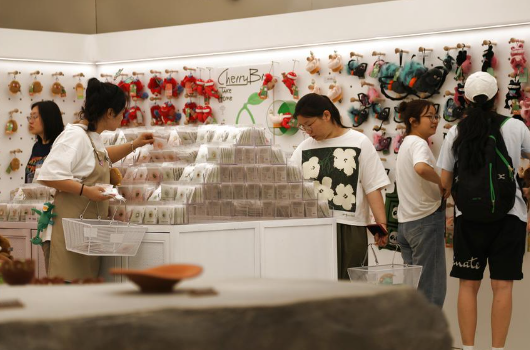
Visitors select cultural and creative products at the art and life gallery affiliated with the Gansu Provincial Museum in Lanzhou, northwest China's Gansu Province, June 13, 2024. (Xinhua/Ma Sha)
In a bustling commercial plaza in Lanzhou, capital of northwest China's Gansu Province, an apple-themed shop has become a magnet for young people, though the items flying off the shelves are not the fruit but plush toys inspired by local apple varieties.
Developed by the creative team of the Gansu Provincial Museum, these toys feature personified expressions and distinct personalities, and represent the latest "Guochao," or China-chic IP.
"We named this series 'Apple Buff,' hoping to add energy and good luck to people's lives," said Wu Xiaoyu, the team's creative director.
In recent years, Chinese museums have found success transforming historical artifacts into creative products. The Gansu team, for instance, previously scored a nationwide hit with goofy plush toys based on the "Bronze Galloping Horse," a tourism symbol of China.
Building on that success, the team is now pivoting from ancient relics to the province's agricultural riches. Gansu is a major producer of apples, potatoes and traditional Chinese herbal medicines. "We want to extract elements from Gansu's food and dialect culture and present them through cute plush toys to convey local culture in a relaxed and happy way," Wu said.
Named to defy the stereotype that local agricultural products are old-fashioned, a collection designed by the Gansu team playfully challenges the traditional stereotype.
The collection features Tianshui cherries with cheek-to-cheek designs and Dingxi potatoes with humorous, pouting expressions. One of the most technically challenging items was a Chinese prickly ash toy, which includes a mechanism to vibrate, simulating the "numbing" sensation of the spice.
The team's innovation has yielded clear commercial success, with the toy of Astragalus membranaceus, or Huangqi, alone selling over 10,000 units on the team's flagship e-commerce store.
According to a 2025 consumer behavior report by iiMedia Research, creativity and uniqueness are the primary factors influencing purchases of cultural products, with nearly 70 percent of consumers showing a high willingness to buy.
The popularity of these plush toys is also rippling out to boost the sales of actual local specialties.
Yang Hongjun, a 63-year-old inheritor of the "Sanpaotai" tea culture, a local intangible cultural heritage involving a tea blend of dates, wolfberries and dried fruits, has partnered with the museum team. While the museum handles the creative packaging, Yang's company manages production.
"I never expected our local specialties could be sold in a museum setting," said Yang. "In the past, our customers were mostly middle-aged and elderly people. Now, we see many young people coming in."
Ban Rui, curator of the Gansu Provincial Museum, noted that the trend signifies more than just commercial success. "The young creative team has expanded its focus from historical artifacts to local culture," Ban said.
"The popularity of these products reflects the younger generation's growing confidence in and willingness to embrace diverse local cultures," Ban added.
Editor:伏娅敏