
Young Researcher Li Zongxing: Rooted in the Qilian Mountains, Protecting the River Sources
In the vast expanse of northwestern China, the Qilian Mountains stretch for thousands of miles, with permafrost and frozen soils extending unbroken. They serve both as a natural barrier for western ecological security and as a demanding testing ground for ecological research. Over the course of two decades, young researcher Li Zongxing has rooted himself in the Qilian Mountains, traversing every corner of the alpine frozen lands. Armed with isotopic eco-hydrology as a sharp tool, he has deciphered the ecological evolution codes of cold and arid regions. Through perseverance and innovation, he has reinforced the western ecological shield, composing a youthful testament to the dedication of researchers in the new era.
On June 7, as part of the online theme activity “Youth Chapter: Tracing Light along the Silk Road,” a press delegation conducted a special feature interview with Li Zongxing. The event was guided by the Online Communication Bureau of the Cyberspace Administration of China, co-hosted by the Cyberspace Administration of Gansu Province, the Education Department of Gansu Province, and the Gansu Provincial Committee of the Communist Youth League, with special support from the China Internet Development Foundation. It was jointly organized by Hexi University, the Cyberspace Administration of Zhangye Municipal Committee, and China Gansu Net.
As a researcher at the Northwest Institute of Eco-Environment and Resources (NIEER) of the Chinese Academy of Sciences, Li Zongxing works on a premier platform in China’s research fields of cold and arid regions and the cryosphere. This prestigious institute carries the founding mission of generations of researchers who have taken root in the Northwest. For decades, they have delved deep into the Gobi and glaciers, accumulating profound academic depth and a rich intellectual legacy in alpine ecology. Immersed in this tradition, Li Zongxing has carried forward the scholarly torch of his predecessors, abandoning armchair theorizing and firmly planting his research ground in the mountain wilderness and frozen soils.
Li Zongxing travels extensively through the heart of the Qilian Mountains—a vast expanse of 183,000 square kilometers, where the alpine frozen soil zones above 4,000 meters are harsh, oxygen depleted, and sparsely inhabited. Yet it is here that he stations himself year-round. For most of each year, he leads his team in fieldwork, trekking across glacial meadows, river valleys, and barren plains, completing on-site surveys and sample collections under extreme conditions. In the past, ecological research in alpine regions often focused on small watersheds, and scattered observational data were insufficient to support broad scale assessments of ecological patterns. To address this, Li spearheaded the establishment of the Qilian Mountains Isotopic Eco-Hydrology Observation and Sampling Network. By integrating hydrological, meteorological, and field station resources along the mountain range, and by collaborating with local grassroots teams, he built a stable sampling mechanism. Routine collection of water, soil, gas, and biological samples is carried out on schedule; rainfall events are sampled and recorded in real time; and during the melt season, systematic sampling is conducted according to altitudinal gradients and ecological types. Over the years, his team has amassed more than 20,000 sets of samples, accumulating an invaluable continuous record of field research data.
As the research matured, this comprehensive observation network expanded beyond the Qilian Mountains. In 2018, the relevant research methods and scientific expedition models were extended to the Sanjiangyuan (Three-River-Source) region, gradually establishing a local eco-hydrological research framework there. By 2022, regional research resources had been integrated, and the research scope was naturally broadened to encompass the entire Qinghai Tibet Plateau. Currently, 25 long-term fixed observation watersheds have been deployed across the plateau, where regular scientific surveys and research are conducted on an ongoing basis. Step by step, this effort has moved cold and arid ecological research from localized exploration toward comprehensive, region wide coordination.
Using hydrogen and oxygen isotope tracing technology, the ecological patterns hidden within the alpine landscapes have gradually come to light. Isotopes in water bodies retain traces of environmental changes, serving as the most direct evidence for deciphering water cycle variations. Through long-term field validation, the team identified the ice and permafrost zone above 3,600 meters as the core water conservation area of the Qilian Mountains. They also determined that water vapor cycling in high-altitude ecosystems can replenish nearly 20% of local natural precipitation, and that the health of the ecological environment directly determines the stability of the region’s water conservation capacity. The team further clarified the formation mechanisms and ecological impacts of multi-phase transformation of alpine water bodies under climate warming, confirmed that frequent exchanges between surface water and groundwater are key to maintaining the stable functioning of water conservation, and pinpointed the objective thresholds for natural succession and gradual degradation of alpine vegetation and ecological communities.
A series of research findings grounded in field observations has provided solid scientific support for delineating the full scope of the Qilian Mountain National Park. The work has also, in light of local conditions, developed ecological restoration pathways suited to alpine mountainous areas and explored a coordinated development model that balances ecological protection with regional development. Extending from the Qilian Mountains to the Sanjiangyuan region and then covering the entire Qinghai Tibet Plateau, the unified research approach and practical standards have offered feasible and actionable references for the governance and protection of the entire alpine ecological zone.
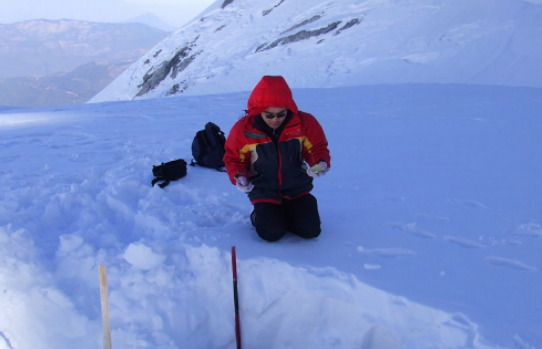
Having spent years working in the field in cold and arid regions, conducting on site scientific expeditions, Li Zongxing has drawn on his extensive field experience to plan and promote the establishment of a regional science and technology innovation center for the ecological environment of cold and arid areas. The ecological foundation of these regions is fragile and highly sensitive to climate change. Numerous practical challenges urgently need to be addressed, including water resource allocation, prevention and control of alpine geological disasters, and operation and maintenance of major ecological projects. Building an integrated sci-tech innovation platform would enable the coordination and consolidation of research capabilities across the field, unify field observation and data analysis standards, and fill many of the current gaps in cold and arid ecological research. Relying on this platform, the team can focus on key areas such as cryosphere evolution, watershed hydrological regulation, and ecological risk early warning, ensuring that scientific research outputs are precisely aligned with the needs of ecological governance. At the same time, the platform will help deeply explore the regional ecological value, allowing the benefits of ecological protection to be naturally integrated into local development processes.
Two decades of trekking through wind and snow—his footsteps have covered the Qilian Mountains and stretched all the way to the snowy Tibetan Plateau. Years of steadfast fieldwork and intensive research have long made the mountains, rivers, and natural landscapes a part of his everyday life. He has always walked calmly and resolutely among the wilderness, using on-ground investigations to understand the very fabric of the land and applying professional research to address the real-world needs of ecological protection. In the vast and open Northwest, he quietly upholds the purest original aspiration of a scientific researcher.
Editor:董泽坤