
Their Youth Thrives in the West
On June 7, the online theme activity “Youth Chapter: Tracing Light along the Silk Road” visited Lanzhou University and the Northwest Institute of Eco-Environment and Resources of the Chinese Academy of Sciences, where the press delegation met three scholars who have taken root in western China.
Their research areas couldn't be more different—one hunts for bacteria, one forges steel, one protects frozen soil. But they all hold a common belief: having chosen to settle in western China and put down roots in Gansu, they are treading the longest journeys with the surest, most grounded footsteps.
Zhang Ying: The Best Microbial Strains Are Hidden in the Farthest Places
China is one of the world’s largest probiotic consumer markets, yet its core microbial strains have long relied on imports. Professor Zhang Ying of Lanzhou University’s School of Public Health draws an analogy: “This is like the ‘chip’ of the bio?industry. Without your own strains, you will always be working for others.”
In 2019, Zhang Ying decided to tackle this problem from the source. She reasoned that China does not lack good strains—what it lacks is a systematic effort to find them.
She set her sights on the Qinghai-Tibet Plateau—a region characterized by low pressure, hypoxia, intense ultraviolet radiation, and extreme temperature fluctuations between day and night. The microorganisms that have survived and been passed down in such harsh environments must have evolved unique stress resistance and special biological functions. Scientifically, this makes the plateau an ideal area for searching for indigenous probiotic germplasm resources. For the research team, however, it also means working long?term in unfamiliar and extreme conditions.
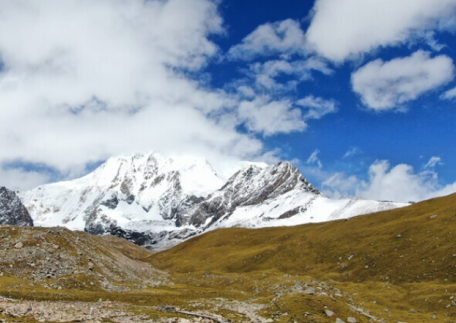
Zhang Ying recalls that when the team arrived, a herder named Lhamo was milking a yak. Intrigued by how the household made their yogurt, Zhang struck up a conversation with Lhamo. Lhamo told her that the yogurt here was not made with commercial industrial starter cultures, but with a "starter" left from the previous batch—handed down from generation to generation. "Our family has been using it for generations," she said. Zhang carefully sealed the freshly made yak yogurt into a cryovial. At that moment, she had no idea that this journey would last five years and take her over 30,000 miles.
In Guoluo, Qinghai, at an altitude of 4,000 meters, the team members suffered severe altitude sickness—some had purple lips and could only walk a few steps before having to stop, hands on their knees, gasping for breath. Zhang Ying remembers that in the home of a herder named Meiduo, she was filling cryovials with samples while breathing from an oxygen tank. Meiduo, watching these pale-faced young people, kept pouring butter tea into their bowls.
In the Qiangtang uninhabited area of Ali, Tibet, the team's target was no longer dairy products, but the feces of Tibetan antelopes and Tibetan wild asses. These wild animals have thrived in extreme environments for millions of years, and their gut microbiota represent the essence of natural selection. However, Tibetan antelopes are highly alert—they bolt at the slightest approach—so the team could only keep their distance, wait in hiding, and collect the samples after the animals had naturally defecated. The wind on the plateau is strong, and the feces dried out quickly; if they missed the window, the samples would lose their viability. Zhang Ying said they spent two full days in Qiangtang. "Every vial of sample could be a key, unlocking a world we have never seen before."
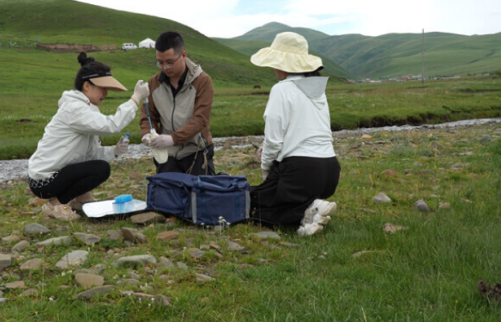
Over five years, Zhang Ying and her team traversed six provinces and regions, covering more than 30,000 kilometers, and systematically collected over 500 samples from various habitats. In the laboratory, they isolated, purified, and identified strain by strain, accumulating a total of over 8,000 strains. From these, they screened more than 300 excellent strains with special biological functions, and established a high-quality probiotic germplasm resource bank and functional gene database covering six provinces and regions of the Qinghai?Tibet Plateau (Tibet, Qinghai, Sichuan, Gansu, Yunnan, and Xinjiang).
What has drawn the most public attention is the team's research on probiotic assisted elimination of microplastics from the human body. Lactobacillus plantarum, through a synergistic effect of physical adsorption and chemical binding, can “trap” microplastics in the intestine, preventing their absorption by the intestinal mucosa, and ultimately excreting them through metabolism. In the first randomized, double-blind, placebo?controlled clinical trial in China conducted by the team, after 60 days of continuous intervention in 63 subjects, the levels of various microplastics in their bodies decreased significantly. “This is the first human trial evidence obtained in this field,” Zhang Ying said.
Today, her team has established a complete industrial chain from strain screening to commercialization. When asked about her original aspiration, she said simply: “Making probiotics that are better suited to the Chinese people—this is something worth doing for a lifetime.”
This is their glorious chapter of youth—and the most moving light along the Silk Road.
Editor:董泽坤