
Gansu Logistics Group Boosts Quality, Efficiency in Export‑Oriented Business
Gansu International Logistics Group has actively integrated itself into the high-quality development of the Belt and Road Initiative, driving the integrated growth of commerce and logistics through business model innovation, and going all out to expand the scale, improve quality, and enhance efficiency of its export-oriented business. From January to June 2026, its import and export trade volume increased by 104.2% year-on-year, while the volume of international block trains dispatched grew by 77.5% over the same period. It also contributed to a 43.8% year-on-year increase in the total import and export trade volume of the Lanzhou New Area Comprehensive Bonded Zone during January–May 2026. With these key international business indicators achieving leapfrog growth, the Group has injected robust momentum into the province’s efforts to build itself into a new inland highland of opening-up.
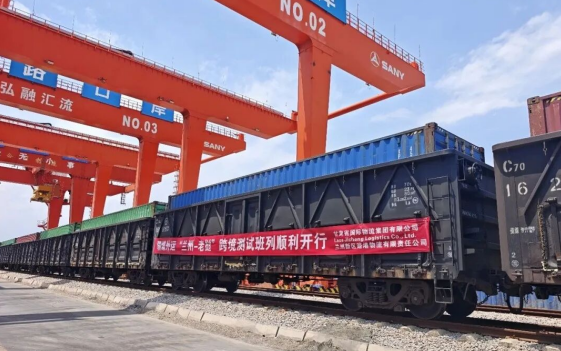
The Group has continuously improved the quality and expanded the capacity of its international block train services, leading to a sustained leap in the capability of its logistics corridors. It has innovatively built an integrated business ecosystem combining “block trains + industry,” “block trains + trade,” and “block trains + finance,” promoting deep synergy between the industrial and supply chains. The operational scale, coverage, and service quality and efficiency of international block trains have been comprehensively upgraded. From January to June, multiple specialized train services achieved new breakthroughs: The China–Kyrgyzstan–Uzbekistan international rail-road intermodal trains saw steady frequency increases, significantly improving the efficiency of the Central Asia corridor and opening up a “golden artery” for regional economic and trade exchanges. The JSQ scheduled train was successfully dispatched for the first time through the Manzhouli Port, opening a new channel for exporting finished vehicles to Northeast Asia and accelerating the global expansion of Chinese-made automobiles. The return trains from Central Asia have imported a cumulative total of 80,000 metric tons of high-quality feed grains and completed transshipment and distribution, supporting the construction of the province’s feed grain collection, distribution, processing, and distribution center. The “Lanzhou–Laos” cross-border test train for Xinjiang coal outbound transportation was successfully operated, effectively expanding a new route for cross-border transport of energy bulk commodities.
The Group’s international trade has scored wins on multiple fronts, with import-export volumes and value both climbing to new levels. By fine?tuning its bulk commodity supply chain, it has steadily brought in overseas staples like grains, oils, minerals, and non-ferrous metals, while stepping up exports of precious metals, farm produce, and consumer goods. The strategy is clear: anchor growth in agriculture, break through with minerals, and pioneer new ground in industrial products. In the first half of the year, mineral trade gained solid momentum, pushing the business to a higher tier. Regular shipments of Peruvian silver concentrate are now supplying a steady stream of raw materials for the province’s non-ferrous smelting chain, shoring up industrial supply resilience. Agricultural trade has also expanded—both in scope and quality. Flaxseed, wheat flour, and fresh fruit imports are keeping local grain and oil processors well?stocked, while “Ganwei” products are finding their way abroad: Jingning apples are now reaching South Asian markets and Gansu dairy products are making inroads into Southeast Asia, steadily widening the global footprint of the province’s signature farm goods.
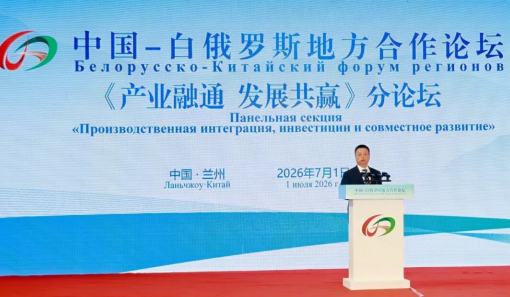
The overseas development strategy is being advanced in depth, and the scope for international cooperation has been effectively expanded. Upholding the integration of "going global" and "bringing in", we have actively participated in the high?quality Belt and Road Initiative, and continuously improved our overseas logistics service network. We joined the provincial government delegation on international economic and trade docking events in Belarus, Georgia and other countries. We took part in the China-Belarus Local Cooperation Forum and the China (Gansu) RCEP Characteristic Agricultural Products Trade Cooperation Docking Conference, and delivered special keynote presentations. We have further tapped into the Central Asian market. We met with Assel Zhanasova, Deputy Chief of the Office of the President of Kazakhstan, and held panel discussions with JSC Kazakhstan Post and Belarus based VLATE Group. During our visit to Kazakhstan, we reached multiple consensuses with local governments on industrial coordination and corridor joint building. We conducted in-depth negotiations with local enterprises covering station?yard construction, trade expansion and logistics optimization. We pushed forward the establishment of overseas logistics bases through asset leasing and equipment exports, and inaugurated the Almaty Overseas Service Station under the Comprehensive Overseas Service Platform. We participated in the China-Russia Expo (Heilongjiang) & Harbin International Economic and Trade Fair, where we comprehensively promoted the Group’s resource strengths and industrial layout to more than 80 Chinese and foreign enterprises. We have made inroads into the South American market and developed the Hong Kong and Macao markets, securing multiple letters of intent for cooperation.
Gansu International Logistics Group will remain focused on its international-oriented development goals. It will keep opening up major international logistics corridors, scale up international trade, deepen pragmatic global cooperation, and upgrade opening-up platforms. The Group will further improve its comprehensive cross-border logistics and trade service system, strive for high-quality growth of export?oriented businesses, and contribute to Gansu’s deeper integration into high-quality Belt and Road cooperation and its development into a new hub for inland opening-up.
Editor:董泽坤